
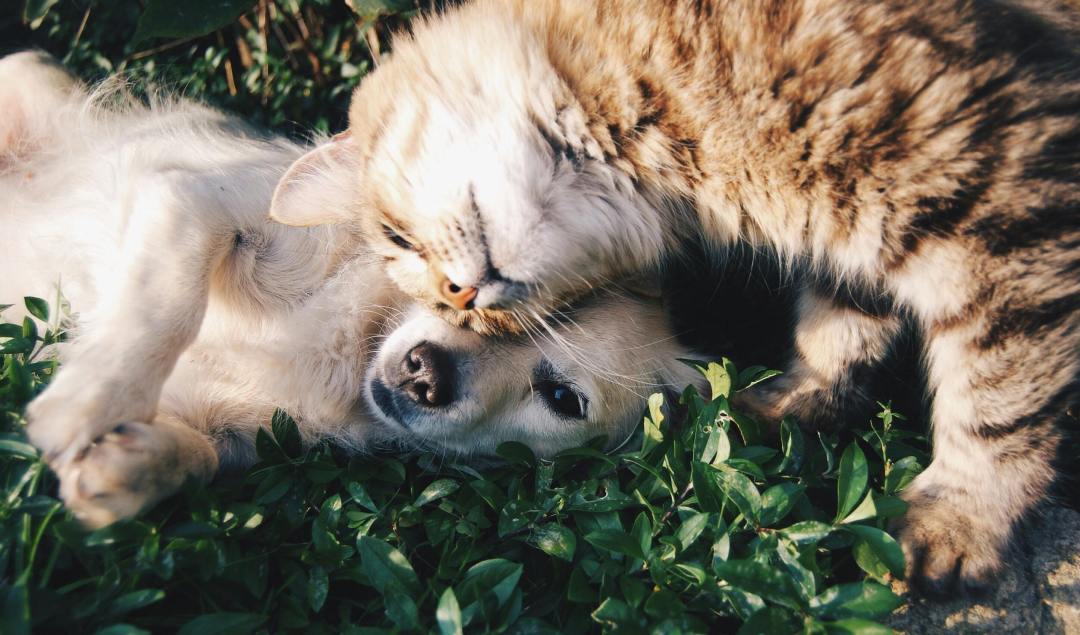
“It’s just a pet…” people might say.
But a pet isn’t “just a pet”; it is a friend, a companion, an immediate family member, and, in some cases, a source of support and survival.
If you have ever lost a pet or you are currently in the process of saying goodbye to one, you might feel lost, alone, or misunderstood by others. If so, this article is for you.
Nikki and Toto’s Story

I was a proud cat mom of Nikki and Toto for 17 wonderful years. They were litter mates and had been together since birth. We had a wonderful life together, lived in many places, met many people, and experienced many things together. It wasn’t until after their passing that I realized how much they shaped my character and enriched my life.
As they both reached age 17, they had both battled with Thyroid disease for nearly seven years. As they aged and their disease progressed, their kidneys began to fail, and suffering slowly crept in. Although I knew one day I would have to put them to sleep, no amount of mental and emotional preparation could have truly prepared me for that exact moment.
I struggled to determine when the right would be for a long time. I asked other friends and family who euthanized pets in the past how they knew it was time. “Julie, you just know.” It was a helpful answer, but it also wasn’t. How do you know? I wanted a formula to follow. I wanted facts.
Then, the day came. I will never forget the feeling I experienced when it finally hit me. It was like a ton of bricks. Nikki and Toto had been together since birth, and even though they were both declining, I didn’t want one to have to live without the other. I immediately burst into uncontrollable, ugly tears. Deep down inside, I knew it was the right decision, but that didn’t make it easier.
I called the vet, told them it was time, and they had me come in immediately. I held Nikki and Toto in my arms, burying my face and tears into their soft fur as they slowly and peacefully left this earth.
I remember returning home from the vet less than an hour after saying goodbye. I remember the feeling of pulling my car into the driveway without seeing Toto sitting in the front window. I remember walking into my house without Nikki and Toto there to greet me. The house felt eerily quiet, empty, lonely. I felt a type of grief that I’d never felt before, and that I didn’t understand. All I could do was cry.
Of course, I’ve had relatives and friends pass on, and it is always sad. However, the grief I experienced after putting Nikki and Toto down left me with confusion, misery, and depression that I was unable to articulate.
I suddenly didn’t know how to “do life”. My home felt like just a building with four walls. I looked around at all the beautiful things that make a house a home, and none of them mattered. There was a lingering sadness and loneliness. It no longer felt like home.
On April 4th, 2024, less than a week after Nikki and Toto passed, the Northeast was hit with a freak, severe snowstorm. It was the worst we had seen all winter—and nearly two decades. Over eight inches of thick, heavy, wet snow had fallen. I lost power, three trees in my yard, and one massive branch landed on the main power line to the house. I was trapped. As some community members claimed, the damage represented was similar to that of a tornado.
Born and raised in the Northeast, I was accustomed to severe weather year-round. But for the first time, I felt scared. I sat in the dark, cuddled in a chair before my pellet stove to stay warm, listening to the wind howl outside. Nikki and Toto were in my arms in that same chair less than a week ago. I felt lonely, sad, and scared. For some reason, I felt more scared without them. I laughed at myself. Why? What are two elderly cats going to do? Plow the driveway? My emotions felt silly, but I also learned why I felt that way.
“The Pet Effect”
After reading, researching, spending time alone, and accepting the loss, I slowly adjusted to a new routine and learned how to live in my home again. Through that process, I also understood how and why losing them felt so different—almost worse—than losing a human relative.
Pet loss is different. Period. Pets aren’t just pets; they are companions. They provide us and teach us unconditional love. They teach us responsibility. They shape our characters and help us become who we are today.
In fact, studies have shown the human-pet bond is known as “The Pet Effect”. Owning a pet can reduce stress levels, anxiety, and depression through a chemical known as oxytocin, which improves our mood.
The Cognitive Impact
Grief affects us physically, emotionally, and even cognitively. It can slow down our decision-making processes, cause short-term memory challenges, and the slightest issue or conflict can be overwhelming. This is because the mind focuses on processing what happened and needs time to “catch up.”
The Stages of Grief
You have likely heard of the five stages of grief. According to Repairing the Heartbreak of Pet Loss Grief by C. Jeffrey, in regards to pet loss, there are seven stages of grief, which include the following:
- Shock
- Denial
- Pain and guilt
- Anger and/or bargaining
- Depression, reflection, loneliness
- Adjusting to a new routine and life
- Acceptance
Everyone experiences grief differently. The stages of grief aren’t necessarily a one-size-fits-all formula, nor are they linear. There’s no “right” or “wrong” way to experience grief. Some people experience the stages in a different order. Some individuals experience some stages and not others; some experience all stages to some degree but not in any particular order.
The good news is there are many activities you can do to help your brain and body through the grieving process. Some of them include:
1. Write, journal, or draw a “grief map” of emotions.
Writing down how you’re feeling each day can help you become more aware of and come to terms with your emotions and stages of grief. If you struggle to understand your emotions, drawing a map of them can help you visualize them.
Writing this blog helped me immensely. It helped me to better understand and cope with my emotions. It also helped me know that this blog might help someone grieving pet loss.
2. Don’t avoid your emotions.
As human beings, we tend to avoid feeling pain and emotion. It’s uncomfortable, and it just sucks. However, it’s also the best way to process emotions and grief. This allows you to find freedom from guilt and move forward in a healthy manner.
I learned that the best way to process grief healthily is to let yourself feel it, as difficult, painful, and uncomfortable as it may be. For me, when I needed to cry, I would cry. That meant rescheduling meetings and/or taking time away from work so I could go take a walk and be alone with my thoughts and tears, or also excusing myself from family outings or events to spend time alone. I hated every second of it, but it helped.
3. Accept irrational guilt.
Thanks to the human brain, guilt isn’t always rational. In times of grief, we often—irrationally—blame ourselves, even if we had no control over the situation.
In regards to pet loss, we might think to ourselves, “If only I called the vet sooner,” “What if I had just let them live a little longer,” or “Maybe I should have given them extra love. Maybe extra love was all they needed.” These thoughts slowly creep into our minds and cause guilt.
To combat guilt, rather than think “what if”, or “woulda”, “coulda”, “shoulda”, tell yourself you did everything within your power to help save your pet. Tell yourself you were an excellent pet mom or dad. And tell yourself that your pet lived their best pet life because of you.
4. Take time for rest and self-care.
This is always important, regardless of whether or not you are grieving. However, it’s even more important during times of grief. Take time off work (if possible), get out and exercise, take a vacation, get a massage, go for a bike ride, play golf, and so on. It can be difficult to engage in these types of activities, especially if you used to enjoy them with your pet, but the process will allow you to heal.
5. Create a memorial.
Create a memorial or shrine for your pet. Choose your pet’s final resting place. This could be in your backyard, your family’s garden, or even a shelf in your home. You can adorn this area with framed pictures of your pet, their collar, or favorite toy. Although it is difficult to pass by and look at your pet’s memorial each day, as it serves as a constant reminder of loss, it is also a reminder of the beauty, love, compassion, and friendship our pets gave us.
Why Pet Loss is Different
So what did I learn about pet loss and why it is so difficult—and different—than grieving the loss of a human being? Because it is. Losing a pet isn’t just a pet; it’s the loss of a companion, unconditional love, and memories. In many cases, it’s even the loss of the lessons we have learned.
Even as I come to terms with and better understand my grief, and as I write this nearly two months, the “little” moments at home are still difficult. Out of the corner of my eye, my black gym bag sitting at the top of the basement stairs looked like Nikki. When I drop an ice cube, my first instinct is to throw it in the cat’s water bowl, where there is now an empty space on my kitchen floor. Or I find a toy stuffed under the couch, the baseboard heater, or tucked away beneath a kitchen cabinet. Those moments still tear me up inside.
By giving myself time and space to process the grief stages in my own way, I learned a lot about myself. I will adopt a pet again in the future. I am not ready yet, but I look forward to the day when I know the time is right. I’ve learned to trust my gut instincts and the grieving process.
Nikki and Toto made up a huge part of my life. Everyone who knew me knew them—my parents, my friends, and my clients. I was only 22 when I adopted Nikki and Toto. I was growing and learning true adult responsibilities. Now that I’m nearly 40, I’m not only a well-rounded and developed person but also stronger and wiser. Even though losing Nikki and Toto was one of the hardest decisions and events in my life, I know I am a better cat mom—and person—because of them.
All in all, if you or your family are grieving the recent loss of a pet, or if you are in the process of saying goodbye to one, you are all too familiar with the pain and heartbreak you likely feel. While this blog cannot bring back your pet, hopefully it helps you and your family process grief in a healthy manner and focus on the beautiful love, companionship, and friendship that your pet gave you.

 bossladyworld.com