
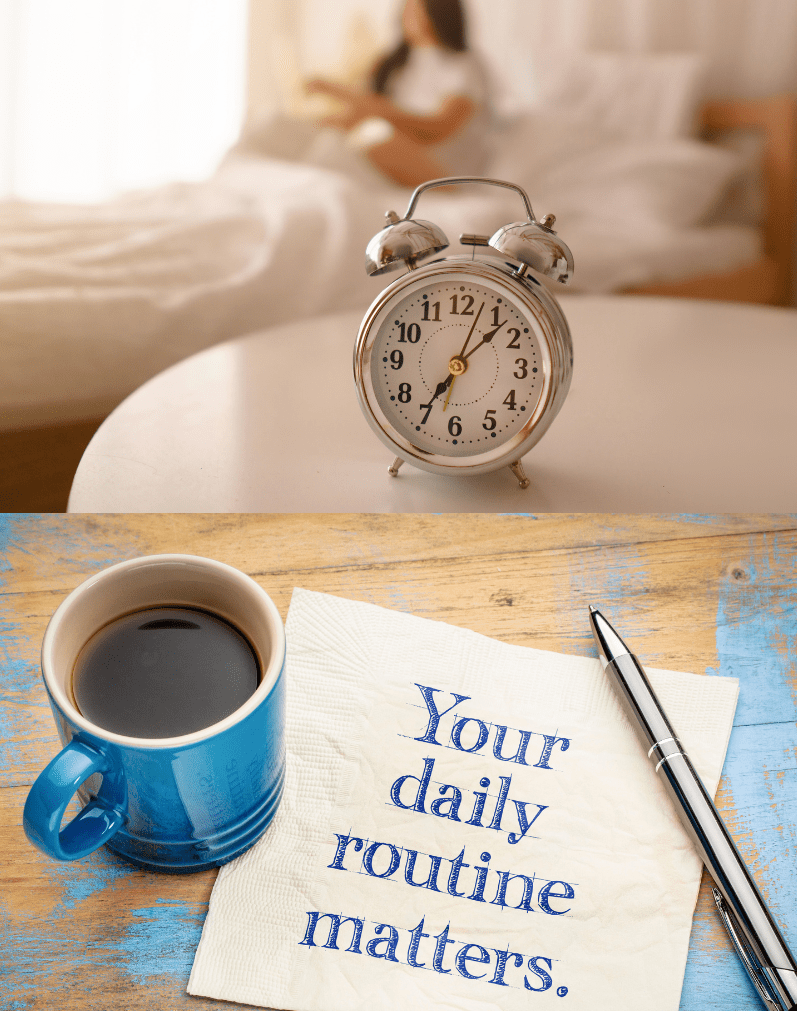
The majority of the tasks we complete each day are habit-driven. In fact, according to a study published in The Journal of Personality and Social Psychology, approximately 43% of our daily actions are performed out of habit, often without conscious thought.
However, not all those habits are good ones. Some habits, such as overeating, gambling, excessive drinking, or other substances, can be destructive. Severe enough, and those habits can transform into ugly addictions, potentially ruining our relationships and lives.
Although challenging, we have the power to UN-learn those bad habits and transform them into better habits, allowing us to live happier and healthier lives. Is it easy? No. But is it possible? Absolutely. And in this blog, you will learn everything you need to know about why and how habits form, and a guide for changing them… for good.
How Do Habits Form?
Habits are extremely powerful but delicate, many of which are formed by our subconscious—the “limbic system” of the brain. This part of the brain works closely with the prefrontal cortex. And by “working closely” I really mean working against it. The “limbic system” is responsible for emotions, fears, and the “fight or flight” response to new experiences or information. This is also where cognitive biases and bad habits form.
Science aside, what does this mean for you? Habits can form due to various cues or “triggers,” whether we form habits subconsciously or deliberately. According to The Power of Habit, by Charles Duhigg, habits form due to a three-step loop:
- Cue – a trigger that tells your brain to do something
- Routine – a mental or physical activity performed over and over
- Reward – a physical, emotional, or psychological gain that allows your brain to determine whether or not it’s valuable to remember the routine for the future. This is related to the outcome of performing the task.
Example Habit: Morning Coffee Ritual
- Cue: Waking up and feeling groggy.
- Routine: Walking to the kitchen, brewing a cup of coffee, and drinking it while scrolling through the news or sitting quietly.
- Reward: Increased alertness and comfort from the warmth and taste of the coffee, reinforcing the habit as an essential part of the morning.
Over time, the brain associates waking up (cue) with making coffee (routine) because of the rewarding feeling of wakefulness and relaxation, making it a deeply ingrained habit.
The Power of WHY
Habits are also very individualized. If you want to change a habit, you first need to identify the habit, understand the cue, routine, and reward hiding in the bushes behind said habit. Then, ask yourself WHY it is a habit and how it prohibits you from achieving a goal or reaching your potential.
- Why do I smoke?
- Why do I feel stuck in this job?
- Why do I overspend?
- Why do I live paycheck to paycheck?
Now, when you think about the better habits you WANT to form, ask yourself WHY again.
- Why do I want to do better at my job?
- Why do I want to make or save more money?
- Why do I want to get in better shape?
- Why do I want to eat better?
The answers to these questions might be insanely obvious (who wouldn’t want to make more money and be in better shape?), but the point is that this exercise will help you drill down to the WHY behind your goals. If you have a crystal-clear understanding of the WHY behind your goals, you will be more motivated to reach them. This brings us to the next point…
Understanding Motivation
Motivation is among the top four most powerful and effective influencers of human behavior. After asking yourself all the WHYs behind your current habits—and also the WHYs behind why you want to change them—you then need to understand your level of motivation to change. Forming habits requires a great deal of mental energy.
Mental energy and motivation go hand in hand. People must be motivated to change old habits—or UN-learn old habits—and learn new ones. UN-learning habits requires changing automatic, already-formed habits. These automatic habits could exist for days, months, or even years. Changing these habits involves neuroplasticity, learning new topics, concepts, or ways of doing things, and then forming new brain pathways and patterns. All of this requires activating our “System 2”, which requires mental energy.
Remember, the human brain forms habits to conserve energy. Without consciously thinking about performing routine tasks, the brain puts those on “autopilot”, and shifts them to the “System 1”, or subconscious mind, so it has the energy to process more difficult thoughts, such as solving a problem.
How does motivation play a role here? Change is naturally hard. Humans are creatures of habit; therefore, change is naturally difficult for us. It makes us uncomfortable and, in many cases, negatively impacts our moods. And when we are in a bad mood, the last thing we want to do is something new… or anything at all.
All in all, understanding the WHY inspires and motivates people to act.
Intrinsic versus Extrinsic Motivations
Motivation comes in two forms: Intrinsic and extrinsic.
Intrinsic = Feeling of accomplishment, fulfillment, pride.
Extrinsic = Meeting a requirement
Emotional Rewards
Seeking rewards from a routine is a process. You may experience the reward or benefit immediately after doing a task for the first time, or you may have to perform it multiple times before seeing a reward. However, motivation is required in order to do the thing for the first time.
This is one reason why making regular exercise a habit is difficult. Do you lose 10 lbs after one 30-minute gym session? No. It might take several weeks or months (depending on your body type) before you begin to see weight loss. Most people give up before then because they aren’t seeing rewards as quickly as they would like, losing motivation.
So what’s the point of all this? Find out what you are motivated most by, and build a routine around it.
Willpower and Self-discipline
Of course, other elements go into making a habit stick or un-learning a habit: willpower and self-discipline. The two often go hand in hand.
Willpower is often described as a “muscle”. As human beings, we only have so much mental energy available on any given day to exert willpower and self-discipline. Therefore, it’s best to conquer your most difficult habits earlier in the day when your “willpower muscle” is energized.
For example, if you use up all your willpower energy on small, trivial tasks, then you likely won’t have enough willpower energy to make it to the gym on your way home from work.
All in all, planning your day around when to perform your most difficult tasks paves the way to ensure stronger willpower and self-discipline to stick to your habits consistently and simultaneously change your thinking patterns.
How to Build Habits into a Routine
Let’s put all the human psychology behind habit formation aside for a moment. If you break it down, breaking and un-learning old habits and forming—and sticking to—good habits comes down to one thing: routine.
As human beings, we naturally like routines because they are familiar and, in turn, reduce uncertainty. In the world of business, routines also reduce risks, errors, defects, and conflicts. Consistency also ensures quality.
Using the same cue and a similar reward will allow you to adjust to a routine easier than starting a new routine, cold turkey.
Creating a Habit of Excellence
Julie’s Story
I am a very disciplined, routine-oriented person. I am a big “todo list” person, and rely on a series of lists powered by various applications to organize my life. I have developed and stuck to a routine for the better part of a decade. That routine was born following a period of my life of turmoil, transition, crisis, and change, as routines often do. Reading The Power of Habit forced me to reflect on my own habits and routine, and how and why they have been successful.
Here are some of the habits I have developed and stuck to consistently over time:
- Exercising daily
- Reading daily
- Writing daily (in my blog and journal)
- Maintaining a healthy diet
- Getting up early
- Going to bed early
- Setting a work schedule
- Drinking water
Now, if I were to think a bit deeper about why I have stuck to these habits for so long, I broke down why and how I have stuck to these and discovered that I am highly motivated by emotional rewards.
For example:
- Exercising daily – Feeling good mentally and physically (in my clothes); feeling physically stronger and accomplished, particularly when I can successfully execute a pole move or performance
- Reading daily – Relaxing my body and mind, and unwinding after a long day; the feeling of escaping daily life and losing myself in a story; feeling accomplished by sticking to my daily—and annual—reading goal; enjoying the experience of reading and holding a book and turning each page.
- Writing in my blog and journal – Applying and improving my writing abilities, expressing myself creatively and helping others; becoming aware and in tune with my thoughts and feelings; setting a positive tone and focus for the day; feeling accomplished whenever I save a new draft or publish a blog; making time to process all my thoughts and feelings allows me to focus better during the day, improving my professional performance.
- Writing “soundtracks” – This is a habit I started over a year ago after reading “Soundtracks” by Jon Acuff. The bad habit of negative self-talk and overthinking repeatedly held me back from activities I enjoy, and “taking the plunge”, so to speak with work projects. Writing good “soundtracks” every single morning not only sets a positive tone, but it helps set a positive—and, in turn, powerful—mindset for the day. Willpower and self-discipline are integrated within that.
- Eating a healthy diet – Feeling good mentally and physically (not feeling gassy, bloated, or nauseous); feeling accomplished whenever I cook a good meal for myself; enjoying a healthy meal; sticking to my calorie intake goal and recording it in my app.
- Getting up early – Enjoy the feeling of “starting the day” routine (feeding my cat, Nirvana, stretching or exercising, turning on lights, the fire, making a warm cup of coffee, getting dressed—all before daybreak).
- Going to bed early – Enjoy the feeling of snuggling, and warmth and comfort in my bed with Nirvana. Additionally, going to bed at a consistent time has also improved my sleep quality over time, allowing me to feel energized and refreshed the next morning, to do it all again.
- Setting a work schedule – The feeling of being prepared, productive, and disciplined. This makes me feel like I am on top of it and better at my job. There’s a part of me that enjoys the “busy” feeling. By setting a consistent work schedule and routine, I feel like I am maximizing my time and applying my best skills and talents throughout the day. If my schedule is interrupted or disjointed in any way, my mind has a more difficult time focusing.
- Drinking water – Enjoying the feeling of hydrating my body; clearer and healthier skin, making me feel beautiful
Over time, the more I packed my routine with healthy habits, and the more emotional and tangible rewards I saw from it, the more I began to enjoy and rely on it. My routine felt less and less cumbersome and more enjoyable. Habits that were once difficult transformed into automatic behaviors. My routine became familiar. I also began to see joy in the little things about them. I paid closer attention to this and asked myself WHY. Here’s what I discovered:
- I like seeing real-time progress. I feel a sense of accomplishment when I see real-time progress (i.e, weight loss trending down; the percentage of a book I read increasing; seeing increased readership and “views” after I publish a new blog)
- I like checking things off on a todo list. As I mentioned above, I thrive off lists. I feel a sense of accomplishment when I cross things off on my handwritten todo list, or check items as “complete” in my Asana task list, or note progress on my monthly goals.
- I enjoy looking forward to and appreciating the “little” things in life, such as making a healthy snack during the work day. Cuddling up in bed with my cat after a long day and reading. Picking out a bouquet of flowers to place in my home office. The sun rising over the mountains on a crisp, winter morning.
- I enjoy feeling productive and accomplished, and like I am doing a good job.
- I thrive on independence. Independence feels like an accomplishment because I can get things done myself and don’t need to rely on others. This is also a periodic reminder that I am stronger than I sometimes think I am. It gives me a confidence boost, motivating me to do more.
- I am enjoy learning. I have always been a “lifelong learner”. Not only do I enjoy learning about new topics through courses, lectures, and reading, I also enjoy learning from experiences and reflecting on them later.
All in all, through this process, I’ve learned that habits should make you feel good. I have also learned that I am highly motivated by experiencing emotional rewards from sticking to a routine comprised of healthy habits. Those healthy habits have formed from my keystone habits, which fueled my personal and professional achievements. And when I began to see success and positive results from sticking to my habits, it motivated me to build more, creating a very positive, continuous cycle.
I admit that during the beginning phases of establishing my habits and routine, I felt slightly embarrassed by it. I was worried my friends and family would think negatively about me, especially during events or holidays when I would grab a piece of fruit for dessert instead of apple pie. Or getting up early on the morning of a weekend or holiday and going for a run. However, over time, I have learned that having a routine and not caring about what others think is okay. Routines support growth.
Now, do I fall off my routine at times? Of course. I am human. There are days when I feel exhausted or sick, or an emergency or traumatic event might occur, and then all bets are off. Even during tough times, when I fall out of routine and forget my habits, I feel… off. I don’t feel well mentally, emotionally, and physically, and I lose my focus.
So, I commit to getting back on track as soon as I possibly can. And when I do, I immediately feel better, and it empowers and motivates me to keep going.
Small Wins That Make a Big Difference
Small wins are important in personal and professional life. According to The Power of Habit, “small wins are a part of keystone habits that have the power to create widespread changes in both our personal and professional lives. Small wins fuel transformative changes by leveraging tiny advantages into patterns that convince us that bigger achievements are not only possible but within reach.”
However, piling on TOO much change at once can make it difficult to make any habit stick. Similar to how you can’t run a full marathon on your first day jogging, start small. Make some progress and see some small wins and successes, and then slowly build from there.
A Powerful Belief System
One core element to embracing change, developing new habits, or unlearning old ones, often happens in the wake of a tragedy or moments of extreme adversity.
In times of uncertainty, when we lose all control, we still have the power to believe—even if it’s just belief in ourselves. When all sense of power and control over our habits seems to be stripped away, the power of belief in ourselves to continue with our habits remains strong. That belief allows us to continue down the “continuous improvement” path.
A GUIDE TO DEVELOPING GOOD HABITS
What I wrote above might sound wonderful, but how do you actually go about building new habits and unlearning old ones? Developing good habits is only as good as the routine that supports them. Here is a guide to help set yourself up for success:
Step 1: Pinpoint the habit.
Before changing or developing any habit, ask yourself:
- What current habits are holding me back from reaching my goals?
- What new habits do I want to develop?
- Where do I struggle?
Step 2: Write it down, and break it down.
Once you’ve identified the habit, write it down, if you find it helpful. Then, break it down into three key components: cue, routine, and reward, and ask yourself WHY.
- Cue: What triggers you to hit the “snooze” button on your alarm? Or grabbing a piece of chocolate instead of fruit?
- Routine: What “corrective actions” could you do when those cues happen? What would a better routine look like?
- Reward: What rewards—physical, psychological, and/or emotional—would you see from new habits and a new routine?
WHY?
Step 3: Create a new routine.
Once you understand your cues and rewards, build a new routine. Here are some examples:
Example 1: Establishing a Morning Workout Routine
- Cue: The poor, physical feeling of being overweight or out of shape.
- New Routine: Set a small goal to exercise at least three mornings per week, or at least 10-15 minutes of workout time to help establish the habit and routine. Start by setting your alarm 10-15 minutes earlier.
- Reward: The reward will be a sense of accomplishment. Use an app to help you track your reading progress. Checking off the days you read instead of watching TV.
Example 2: Establishing a Daily Reading Habit
- Cue: The need to watch TV or scroll on social media.
- New Routine: Replace that need with selecting a book you want to read. Rather than reach for the remote or your phone, reach for your book. Set a small goal to read 10-20 pages each day, or for at least 10-15 minutes. Tie reading into an existing routine, such as while sipping your morning coffee or right before bedtime.
- Reward: The reward will be a sense of accomplishment, better sleep quality, or simply the experience of immersing yourself in a story. Use an app to help you track your reading progress. Check off the days you read instead of watching TV.
Step 4: Track your progress.
There are many different ways you can track your progress on following your new routine, and subsequently, your new habits. You can use an app, an Excel spreadsheet, or good, ol’ fashioned pencil and paper. Get creative!
Step 5: Celebrate the “small wins”.
As you start to see the new routine paying off, reinforce the habit loop by celebrating the reward. Acknowledge your progress, whether it’s through a feeling of accomplishment, a small treat, or positive feedback from colleagues.
All in all, if trying to change habits is overwhelming, or if you are trying to change a BIG behavior, remember to break it down. Start small. Can the BIG HABIT be broken down into several smaller habits? If so, start by changing one small habit at a time.
Again, as mentioned above, once you begin to see progress from changing those smaller habits, it will motivate you to continue and tackle more small habits, leading up to changing that BIG HABIT.
CONTINUOUS IMPROVEMENT
Continuous improvement is my “theme” for 2025. I learned and grew a lot, both personally and professionally in 2024. I want to continue to make strides and progress in 2025.
Changing habits isn’t easy, but it is possible. Remember that it is often through turmoil, times of difficulty, and crisis when the worst—and also the best—habits form. Willpower is born during moments of adversity, pain, or fear. These moments and emotions often prevent us from doing something we know we should do.
However, writing out a plan or thinking through how you will handle those painful, fearful, or “risky” moments will help you power through, allowing you to conquer those challenges. Working through challenges, along with focusing on small wins, boost confidence, which fuels your motivation, which, in turn, makes performing the task a second time or a third easier. Over time, that task becomes—you guessed it—a habit. Remember, challenges are opportunities for joy. The keys are consistency, self-awareness, and a commitment to continuous improvement.
When you learn to trust the process, and by understanding the psychology behind habits, identifying your motivations, and creating structured routines, you have the power to transform your daily actions, and ultimately, your life.
Regardless of whether you’re unlearning bad habits or building new, positive ones, remember that every step forward, no matter how small, is progress. So start today—because the habits you create now shape the future version of yourself.

 bossladyworld.com
How can I follow you?
LikeLike
💡💡💡💡….
LikeLiked by 1 person